



History of the Court System of Sri Lanka
GEORGE the third, by the Grace of God, of the United Kingdom of Great Britain and Ireland King, Defender of the Faith: to all to whom these resents shall come, greeting:
THE CEYLON LAW RECORDER. Vol. V January, 1924. Part VII THE TRECK TO HULTSDORP. (Continued)
The triumph of the Supreme Court was short lived. Two days after the closing of the Fort Gates the Governor informed the Judges that he intended to remove the Court House from the Fort to its present site, which was formerly the residence of Mr. Andrew, the Collector, and for a time of the Governor himself. In a Letter of forced courtesy the Governor wrote: “In addition to the various inconveniences which must attend your Lordship’s permanent residence in this crowded garrison, I have the honour to inform you that I expect in a very short time the arrival of a Regiment of Negroes from the West Indies whose habits of life are so little known and probably so little analogous to the natives of this Island that it is equally desirable for the department over which you so worthily preside as for their own discipline that they should be quartered within the Fort.” Chief Justice Carrington and Puisne Justice Lushinghton replied at length protesting against the removal. “That the Fort of Colombo,” they wrote, “is not merely a Garrison Fortress, but the principal town of our settlements in Ceylon, the centre of the British population of commerce and of business is obvious, the public wharf, the custom house, the offices of government are situated there and public convenience should appear therefore to suggest the propriety of making that the station of the Supreme Court.”
But there is another reason equally cogent with public convenience – the necessity of public control. In this isolated spot, at this distance from Great Britain, in a society of which the military must form a very large proportion, the presence of a Court of Law appointed by the Sovereign is the best and most constitutional protection that can be afforded to the inhabitants.
Its active powers are seen and acknowledged and even the tacit influence of its presence is of considerable service in checking the turbulence of passion and preventing the commission of crimes.”
The Judges then reiterated the facts narrated in our former communication and gave it as their opinion that the reason for the proposed removal, the Governor’s decision was based on the erroneous belief that there was a conflict of the civil jurisdiction (of the Supreme Court) with the jurisdictions, opinions and prejudices of the military.” They complained that in consequence of the illegal command by the highest military authorities without any communication with the Governor “the ordinary course of civil communication of commerce of Justice and of Government were impeded and the all course of justice was suspended. Our process must run through the Fort and it must be obeyed”. To this the Governor sent a courteous reply making it clear, however that the change must take place. “I’m equally sensible with your Lordships,” he wrote “That the military powers must be kept within bounce. All that has lately taken place here tends to prove that no attempt to exceed it can past, and … as the whole garrison had sued their commandant under recognizance and will shortly see the Commander of the Forces at your bar I certainly cannot suppose they will entertain higher ideas than they hitherto have of the lawful extend of military authority.”
But behind the soft words and courteous language of the Governor it was not difficult to discover a subtle display or of resentment of the at the action of the judges. With reference to the judicial inquiry pending before them, he wrote, “I can only assure your Lordships that I should not have resented it so publicly or so instantaneously as I did, had I not conceived that the identical disrespect to your Lordships was involved in the direct contempt of my authority, and that by the same measure I asserted and restored the dignity of both.
Your Lordships have done otherwise and the conduct of the Lieut.-Governor will be brought under your immediate examination.
That you have proceeded and will proceed against so high an officer with all due courtesy and mildness I have no doubt.
Her Majesty has been pleased to entrust me with the preservation of the general safety and tranquility of the settlements and I conceived myself bound to exercise my own powers firmly and conscientiously in discharge of that primary duty.
I have purchased for your acceptance the spacious and airy house of Mr. Bertolacci with a sufficient demesne around it and am perfectly convinced that your removal to it will neither be derogatory from your dignity nor in any manner inconvenient to the people whose rights are entrusted to your care.”
These were soft words but their purport was quiet clear. That the Judges replied with equally forced courtesy cannot be doubted but so far no record of their reply has been discovered. Perhaps they may yet be found in some neglected shelf of the record office.
Many years later Sir John Bonser wanted the Court removed to the Fort, but without entering into the question whether it was desirable or not, it was pointed out that even if funds were available there was no room there for the necessary buildings, and nothing was heard on the subject. There was also the somewhat absurd proposal by a later Chief Justice to have the appeal Court at Kandy or Nuwara-Eliya, but nobody entertained the idea seriously.
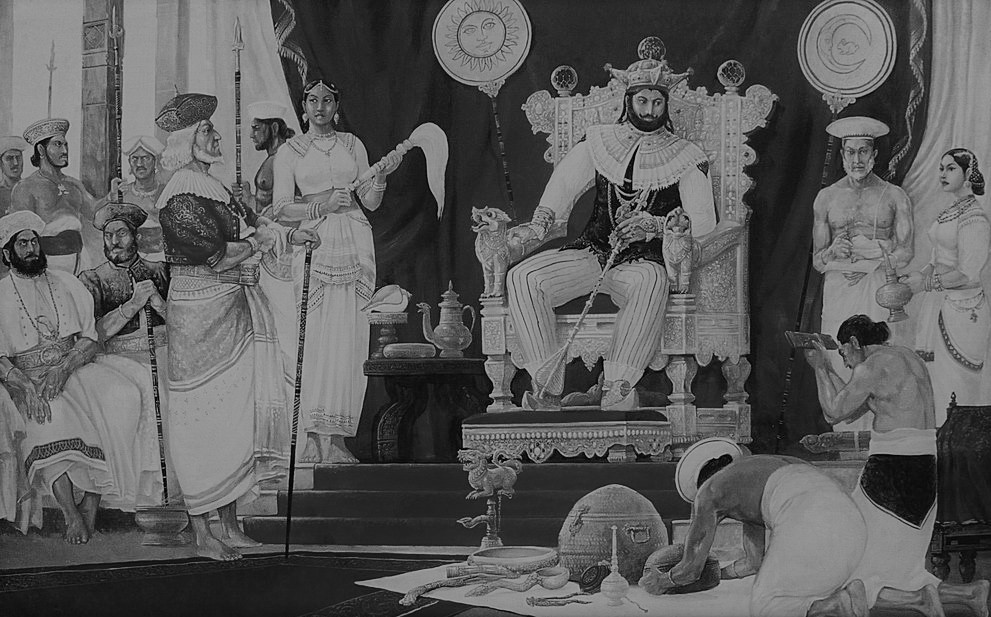
The Royal Court of King Sri Wickrama Rajasinghe in the 19th Century.
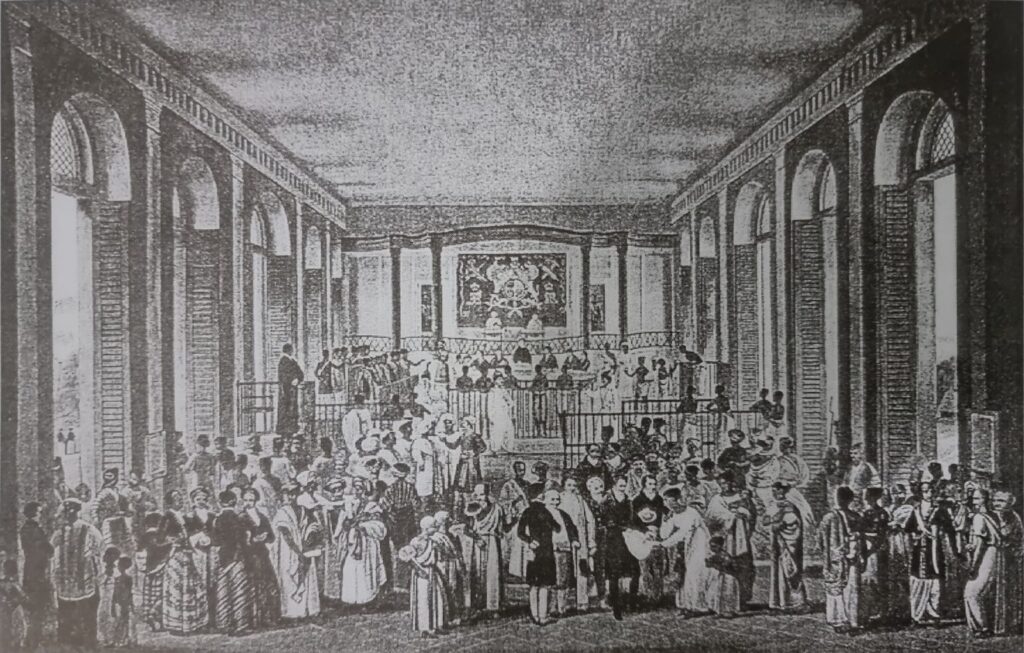
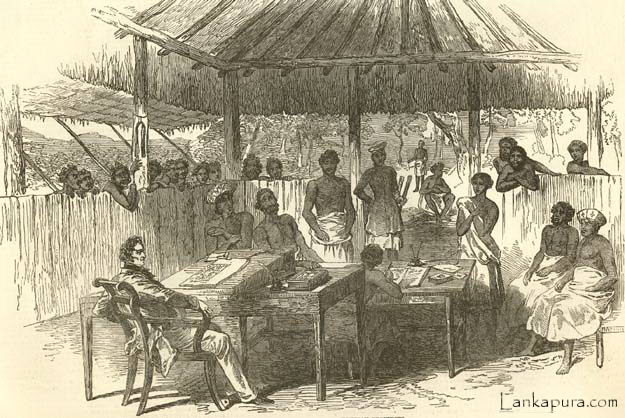
The Supreme Court of Sri Lanka in 1816
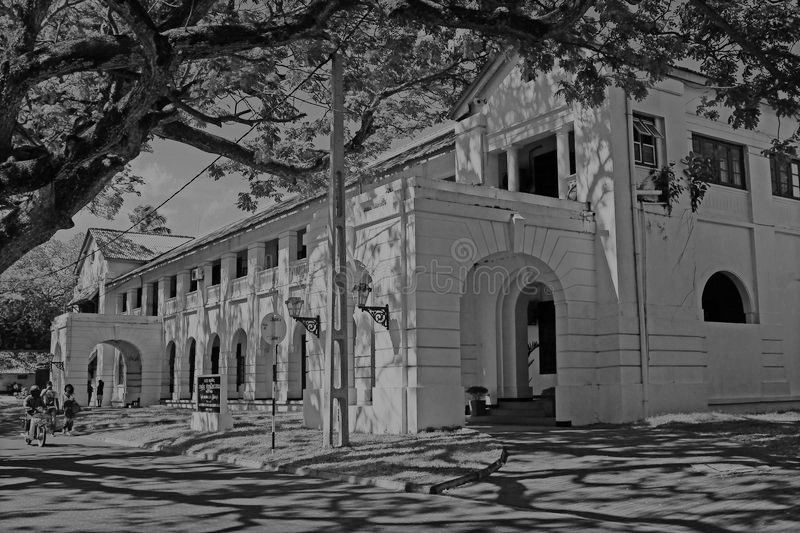
Old Supreme Court Building